Food Safety Month may be coming to a close, but for multi-location foodservice, restaurant, retail and grocery operators, food safety is a year-round responsibility.
Managing food safety across multiple locations introduces a unique challenge: consistency. Even with strong policies and well-trained teams, every additional location adds more employees, equipment, processes and opportunities for something to be missed.
What matters is whether those procedures give you the visibility and control to identify risks before they become bigger problems.
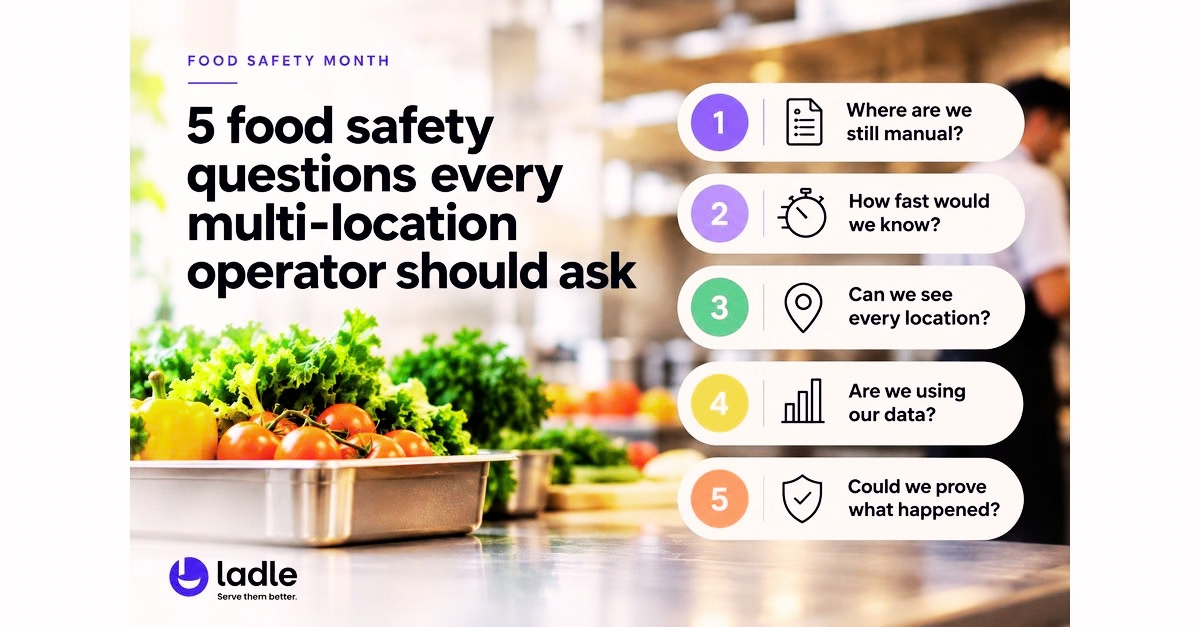
Here are five questions every multi-location operator should be asking.
1. Where are we still relying on manual processes?
Paper logs, handwritten temperature checks and other manual processes have been part of food safety programs for decades. But they also depend on employees completing the right task, at the right time, and recording the information accurately.
For a single location, spotting a missed check may be relatively straightforward. Across dozens, hundreds or even thousands of locations, it becomes much more difficult.
Look at where your teams are still manually recording temperatures, completing checklists or documenting corrective actions. Could those processes be digitized or automated? And more importantly, could your organization gain better visibility into whether they are actually happening?
Digitization makes food safety information easier to capture, access and act on.
2. How quickly would we know if something went wrong?
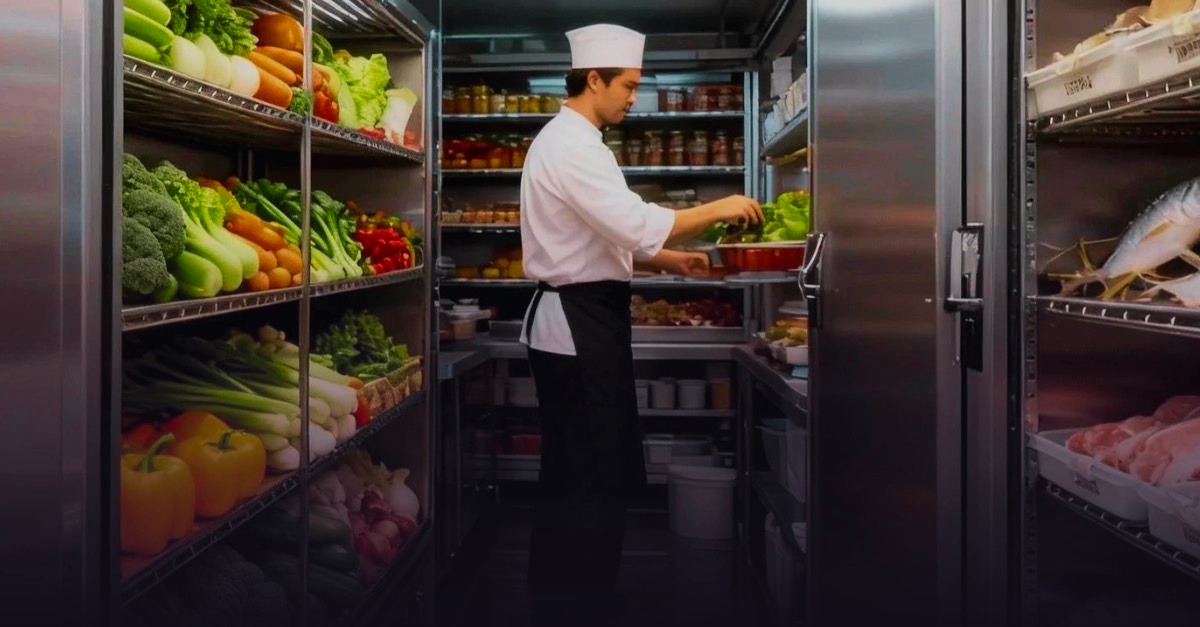
Imagine a walk-in cooler begins drifting outside its safe temperature range overnight.
Would someone know immediately? When the opening manager arrives? During the next scheduled temperature check? Or only after product has already been compromised?
The time between a problem occurring and someone becoming aware of it can make an enormous difference.
Continuous temperature monitoring and automated alerts can help operators identify potentially unsafe conditions as they happen, giving teams an opportunity to take corrective action before the issue results in product loss, operational disruption or increased food safety risk.
The goal should increasingly be to move from discovering problems to detecting them.
3. Can we see what is happening across every location?
Individual stores may have excellent food safety practices, but corporate and regional leaders need a broader view.
Can your food safety team quickly identify locations with repeated missed checks? Can you see where corrective actions are occurring most frequently? Can you identify equipment or processes that repeatedly create problems?
If answering those questions requires emails, spreadsheets, phone calls or manually collecting information from individual locations, your organization may have a visibility problem.
Centralized food safety data can help leaders identify patterns across locations and focus their attention where it is needed most.
4. Are we collecting food safety data or actually using it?
Most operators generate a significant amount of food safety information. Temperature readings, checklist results, corrective actions, audit findings and equipment alerts all create data.
But collecting data and learning from it are two very different things.
Look beyond whether required tasks were completed. What does the information tell you?
Recurring temperature excursions may point to an equipment issue. Repeated missed tasks may indicate a training or staffing problem. Similar corrective actions across multiple locations may reveal a process that needs to change.
Food safety data becomes much more valuable when it helps operators identify trends and address risk proactively.
5. Could we demonstrate what happened if we needed to?
When a food safety concern arises, documentation matters.
Operators may need to determine when temperatures changed, whether required checks were completed, what corrective action was taken and who responded.
That information should be easy to find.
A strong food safety program creates a reliable record: what happened, when, and how the organization responded. For multi-location operators, having consistent digital records across the organization can make responding to audits, investigations and internal reviews significantly easier.
Food Safety Month Ends. The Work Doesn’t.
Food Safety Month is an important reminder to examine the systems and practices that protect customers, employees, products and brands.
But the biggest opportunity isn’t adding another food safety task to the list.
It’s creating systems that make food safety easier to manage, risks easier to identify and information easier to act on across every location.
As Food Safety Month comes to a close, it’s worth asking one final question:
How confident are you that you know what’s happening across your operation right now?
At Ladle, we help multi-location foodservice, restaurant, retail and grocery organizations move beyond manual food safety processes with digital checklists, continuous temperature monitoring, automated alerts and centralized visibility.