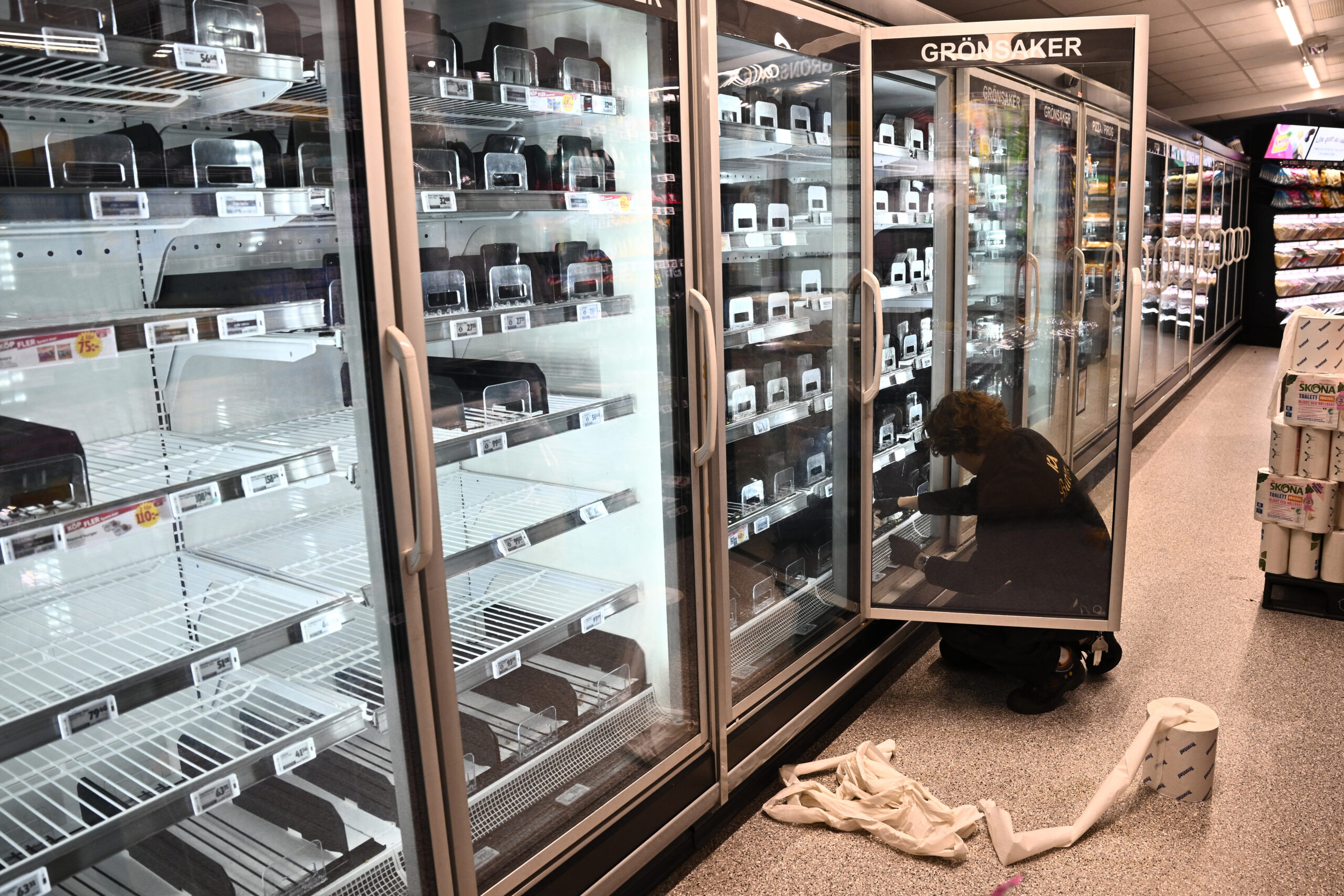
Twice in three weeks, someone has reached into supermarket refrigeration systems in Europe and turned the cold off. Both attacks happened overnight, when stores were closed and nobody was watching the cases.
For grocers anywhere, that raises an uncomfortable question. If your coolers started warming up at 2 a.m., how long would it take anyone to know?
What Happened
Overnight on October 11, attackers remotely accessed refrigeration controllers at hundreds of French supermarkets and switched units into a forced defrost mode. Temperatures in some fridges and freezers reached 50°C (122°F). Chains including Intermarché, Coopérative U, Carrefour, Monoprix, and E.Leclerc reported affected stores, and many had to throw out their fresh and frozen products. The Paris prosecutor’s office said the incident contributed to fires at some locations.
A second wave hit overnight into November 2. Supermarkets in Sweden, Belgium, Luxembourg, Estonia, and Ireland reported fridges and freezers warming up. One ICA store in southern Sweden said its units had been set to 50°C. Ahold Delhaize reported an IT incident affecting refrigeration at several dozen Belgian stores, and SuperValu’s parent company said at least 13 Irish stores were discarding fresh and frozen food. Some stores moved stock into refrigerated trucks to save what they could.
French authorities and security researchers have pointed to internet-connected refrigeration controllers, some running outdated firmware, as the way in.
Not every store had the same outcome. In Estonia, refrigeration service provider Kitman Coldtech said it responded to an affected store’s incident within about 10 minutes. According to Estonian broadcaster ERR, the freezer temperature rose only two to three degrees, and the store avoided product damage. Speed made the difference.
Why US Grocers Should Pay Attention
This isn’t only a European problem. Reuters reported that Pentagon investigators are looking into freezer failures at US military commissaries in August as a possible cyberattack. That investigation is ongoing.
And cyberattacks are just the extreme version of an everyday risk. Compressors fail. Power goes out. A door gets left open, or a setting gets changed by mistake. Every one of those can push a case out of range overnight, and the outcome depends on how fast someone finds out.
The Cost of Finding Out Too Late
When a cooler or freezer runs warm for hours before anyone notices, the bill adds up fast. There’s the product you have to pull and throw away. There’s the labor to inspect every affected case, document what was lost, and restock. There are emergency service calls, empty shelves, and lost sales. And if customers start to wonder whether your cold product is safe, that costs you too.
Food safety is on the line as well. Any product that spent time outside its safe range has to be evaluated, and your team needs records showing what happened and what they did about it.
Why Independent Monitoring Matters
A refrigeration controller tells you what the system thinks it’s doing. If that controller is malfunctioning or has been tampered with, its own readings and alarms may not tell you the truth.
Independent temperature sensors work differently. They measure the actual temperature inside each case and report it through a separate system. That doesn’t replace securing your refrigeration equipment. It gives you a second set of eyes that doesn’t depend on the equipment it’s watching.
A few questions worth asking about your own stores:
- Would we know about a temperature problem overnight, and who would get the alert?
- Does our monitoring rely on the same controller or network as the refrigeration system?
- If nobody responds to an alert, does it escalate to someone else?
- Could we pull time-stamped temperature records for every affected case the next morning?
- Can we see which stores are affected across the whole chain?
How ComplianceMate CTM by Ladle Helps
ComplianceMate CTM by Ladle gives grocery and food service operators continuous wireless temperature monitoring for coolers, freezers, and walk-ins.
- Readings every 10 minutes, around the clock. Wireless sensors work inside walk-ins and freezers, so you’re not relying on twice-a-day manual checks.
- Alerts that reach the right people. When a reading goes out of range, ComplianceMate CTM sends text and email alerts to the people you choose, with escalation if no one responds.
- Monitoring that runs on its own connection. With a cellular gateway, temperature data travels over its own cellular connection, separate from the store’s network.
- No gaps in the record. Sensors store readings onboard if a connection drops, then sync when it’s back.
- A clear history. Time-stamped temperature data is stored centrally and searchable, so you can see when a case went out of range and how long it stayed there.
- Visibility across every store. Reporting rolls up from the store level to corporate and shows which locations need attention.
- A documented response. Alert acknowledgment and resolution tracking show how your team handled each issue.
Europe’s grocers learned the hard way that refrigeration can fail without warning. You can’t control every threat to your equipment.
Know when temperatures change, before a small problem becomes a costly one. See how ComplianceMate CTM helps protect your cold chain. [Request a demo]
Sources
- ABC News (Associated Press), November 2, 2026: Freezers at supermarkets in several European countries hit by apparent cyberattacks
- ERR News, November 2, 2026: [add article link]
- CBS News, November 2, 2026: More grocery stores in Europe report fridge and freezer temperature spikes as apparent cyberattacks continue
- BleepingComputer, November 2, 2026: Hackers disrupt refrigeration systems at European supermarkets
- The Register, November 2, 2026: Frozen part II: Hackers remotely defrost produce in Euro supermarkets … again
- France 24, October 12, 2026: ‘Unprecedented’ cyberattack targets refrigeration units at hundreds of French supermarkets
- Fortune, November 1, 2026: Hackers pushed freezers at hundreds of French supermarkets to 122 degrees. Now the Pentagon is asking whether the same thing hit U.S. military bases